What to Expect from a Meditation Teacher Training
TL;DR


The way meditation retreats are marketed has created a particular set of expectations around anything with the word "meditation" in it. Calm. Slow. Spacious. Gentle mornings with nothing scheduled.
A teacher training is not that.
The pace is structured and the days are long. You will be up before six, in practice by six thirty, and in theory blocks by ten. By the second week, you will be facilitating meditation sessions in front of your peers with a teacher watching. It is demanding in a way that surprises most people, not because it is harsh, but because it requires sustained attention every single day with very little time to mentally check out.
If you know that going in, you can prepare for it. If you do not, the first few days can feel like a gear shift you were not expecting.
What Is a Meditation Teacher Training?
A meditation teacher training is a full-time, residential program that trains you to teach meditation. It typically runs 200 hours over 21 days and covers meditation technique across traditions, pranayama, yoga philosophy, the neuroscience of meditation, and supervised teaching practice. Think less spa, more school.
The residential format matters. You are on site, on schedule, and in the material every day. There is no commuting back to a hotel and switching off. The environment is part of the experience, and most serious programs are designed around that continuity.
The Daily Schedule
The shape of the day in a serious meditation TTC looks roughly like this.
Early morning begins with kriya, the cleansing practices that prepare the body and nervous system for sustained stillness. Then a block of asana and pranayama, usually 90 minutes. Then a morning meditation session. Breakfast. Two theory blocks covering philosophy, neuroscience, or technique. Afternoon asana and pranayama again. Evening meditation, typically longer and quieter than the morning session. Dinner.
That is the container. It repeats, with variation, for the duration of the training.
What shifts week by week is the teaching practice component. In the first week you are learning. By the third week, you are expected to hold sessions independently and receive direct feedback on what you did.
The Curriculum: What You Will Actually Study
Theory
More than people expect. A good program covers yoga philosophy, including the Yoga Sutras, the pancha koshas, and the concept of the nadis and chakras, as well as the history and traditions of meditation across lineages: Advaita Vedanta, Buddhism, Taoism, Classic Yoga. The neuroscience of meditation has become a standard component in rigorous programs. Research reviewed in peer-reviewed journals documents measurable changes in stress hormones and psychological wellbeing with 12 weeks of consistent practice. Understanding this gives you credibility with secular students who need a science frame before they can engage with the practice.
Techniques
A non-dogmatic program will move through multiple methods: breath awareness, yoga nidra, mantra chanting, sound healing, self-inquiry, walking meditation, and movement meditation. You will not master all of them in 21 days, but you will have enough grounding in each to teach the fundamentals and recognise where a student might need specific guidance.
Teaching Skills
This is the component hardest to prepare for. Learning to sequence a meditation session, manage the energy in a room, respond to what comes up, and deliver instructions clearly while someone is in a vulnerable state of attention requires practice under observation. Most programs structure this as escalating challenges: first you guide one technique, then a short session, then a full class. It is uncomfortable at each stage. That discomfort is normal, and it is where the skill actually builds.
What Catches People Off Guard
Three things come up consistently.
The first is emotional processing. When you spend sustained time in stillness and silence, things surface. Unresolved feelings, habitual thought patterns, memories that were not on the agenda. This is not a sign that something is wrong. It is a sign the practice is working. It can be disorienting if you are not expecting it.
The second is physical tiredness in the first week. Waking early, holding structure, and staying mentally present all day draws on reserves most people do not regularly use. It usually lifts by the end of week one.
The third is how much theory there is. People come expecting three weeks of meditation. They do meditate, but they also read, take notes, and sit through lectures on philosophy and anatomy. This is what makes the certification meaningful. If you wanted only the practice, a retreat would serve you better.
Who Gets the Most Out of It
The people who leave with the most are those who arrived with a genuine practice already in place and a real question about how to share it with others. You do not need ten years of sitting behind you. But you do need to know what it feels like to stay with discomfort, to return to your breath when the mind would rather be elsewhere, and to find value in the practice even on days when nothing feels particularly profound.
A training is not the place to begin your practice. It is the place to develop it and learn to offer it to others.
People who struggle tend to arrive expecting a structured retreat or a wellness experience with a certificate at the end. The mismatch between that expectation and the reality of the schedule makes the experience harder than it needs to be.
If you are considering a residential program, the Omunity 21-Day Meditation and Pranayama Teacher Training in Varkala, Kerala runs 200 hours, is Yoga Alliance certified, and covers meditation across traditions alongside pranayama, yoga philosophy, and supervised teaching practice.
Frequently Asked Questions
How long is a typical meditation teacher training?
Most 200-hour programs run 21 to 28 days as a residential intensive. Some schools spread the hours across shorter modules over several months. The intensive format integrates the material more quickly and builds a stronger daily practice rhythm than a modular approach.
Do I need a daily meditation practice before applying?
Yes. Not necessarily an hour a day, but something established and regular. You should know what meditation feels like from the inside, not just what it is in theory. Most schools ask about your practice background in the application process.
Will I be ready to teach after the training?
You will have the foundation to begin teaching. The first sessions you guide will feel uncertain. That is normal, and it is part of the process. Teaching consistently for six months after completing the training is what produces confidence. The certification gives you the credential and the knowledge. Teaching gives you the skill.
What is the difference between a 21-day TTC and a 12-day immersion?
A 21-day TTC includes all the components described above and leads to a 200-hour Yoga Alliance teaching certification. A 12-day immersion is focused on deepening personal practice rather than training you to teach. It does not include the teaching skills component or result in a teaching certification. It suits advanced practitioners who want to go deeper before deciding whether to pursue the full training.
Is a meditation teacher training physically demanding?
More than people expect, but not in the way yoga teacher trainings can be. The physical component, asana and pranayama, is a supporting practice rather than the main event. What is actually demanding is sustaining attention and structure every day for three weeks with minimal downtime.
Lisa is a conscious content writer at Omunity Meditation.
What we offer
From intensive teacher trainings to week-long retreats, we offer programs for every stage of your meditation journey.


200H Meditation & Pranayama Teacher Training
A 21-day intensive teacher training course designed to dive deep into consciousness and learn how to guide others. For yoga practitioners who want to dive deeper into meditation & pranayama and teach it.


Meditation Immersion Program
An intensive 12 day program to dive deep into yourself and discover who you are, through multi-style meditation & pranayama practice.

Meditation & Silence Retreat
Take 6 days off of modern life to get back to yourself. Through silence, meditation practice and creative exploration, you will reconnect with who you truly are.
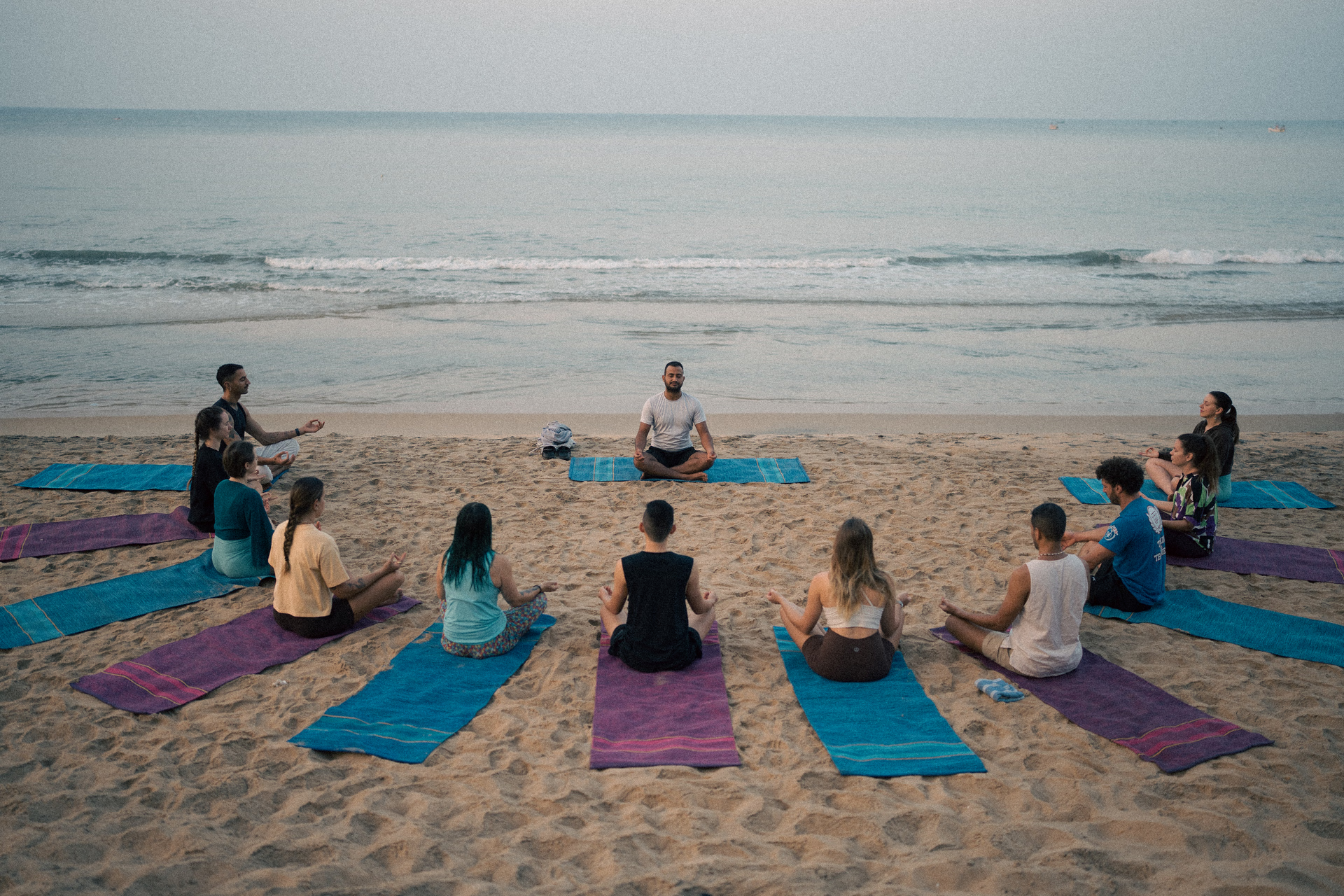
Practice near the ocean and Jungle of Kerala
Omunity Meditation school located in Varkala, a serene cliffside town in Kerala, known for its unique mix of Ayurveda, yoga, beaches, and surf culture. Just minutes from our private campus, you’ll find golden sands, breathtaking cliffs and cosy cafés overlooking the Arabian Sea. Unlike India’s busier tourist hubs, Varkala offers a safe, welcoming atmosphere, ideal for yogis, travelers, and surfers looking for both peace and connection.