What Meditation Actually Is (And What It's For)
TL;DR
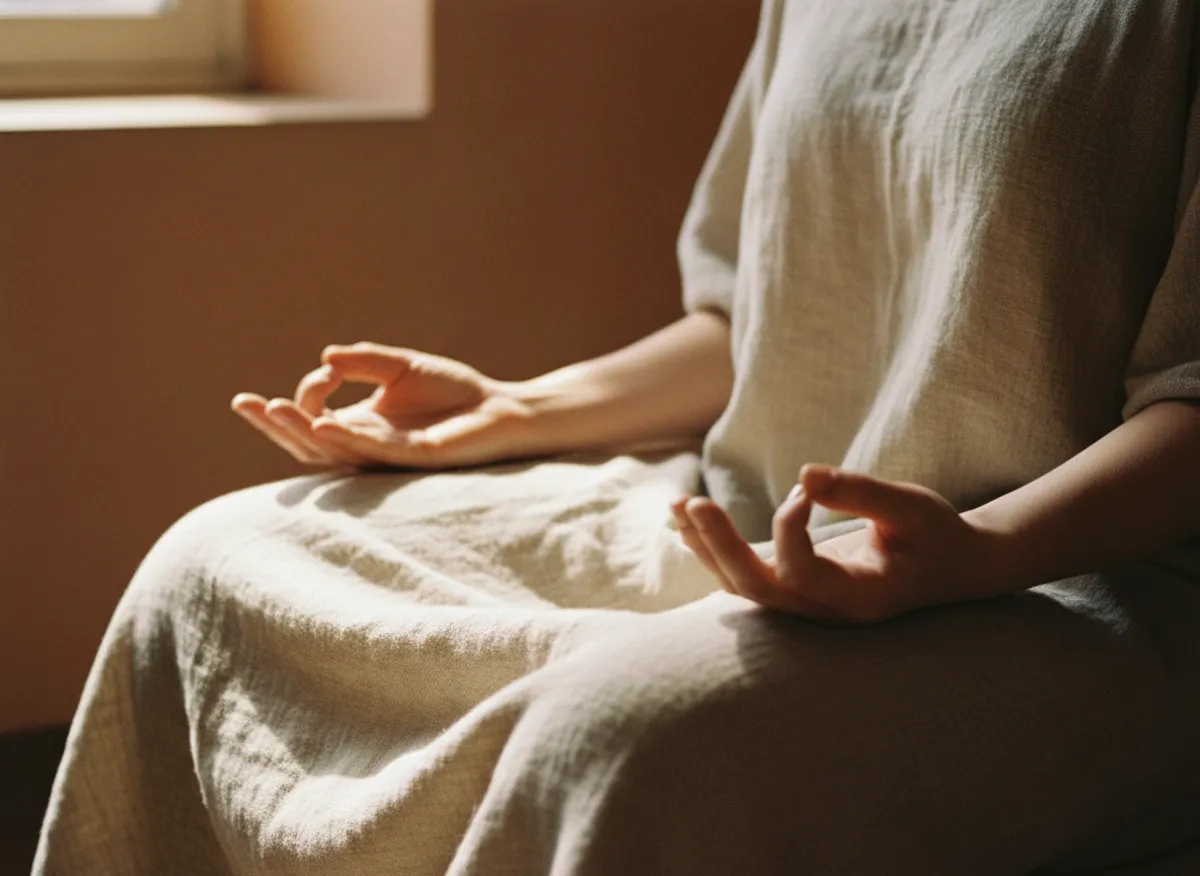
Meditation is, at its most fundamental, a disciplined practice of attention. Across traditions — Buddhist, Vedantic, Taoist, Sufi — the core activity is remarkably consistent: the practitioner directs awareness toward a chosen object, most commonly the breath, observes when the mind has wandered, and returns. This cycle of noticing and returning is not a preliminary to meditation. It is the practice.
What distinguishes meditation from relaxation or contemplation is this quality of sustained, intentional observation. The practitioner is not trying to empty the mind — a persistent misconception — but rather to develop a clear, non-reactive relationship with its contents.
How Does Meditation Change the Mind?
Meditation works by making the mind's automatic patterns visible rather than suppressing them. When attention is consistently returned to a chosen object, the default tendency to drift into rumination and narrative gradually becomes observable. The capacity to notice this drift — and choose where to direct attention instead — is the skill being built.
When the mind is not under deliberate observation, it tends to operate on autopilot: rehearsing past events, anticipating future ones, generating narratives and judgements with little conscious direction. This is not dysfunction; it is the default mode network operating as designed. Meditation interrupts this pattern not by suppressing it, but by making it visible.
The capacity to observe one's own mental processes — metacognition, in psychological terms — develops through sustained practice. Over time, practitioners report a notable shift: thoughts and emotions begin to feel less like facts about reality and more like events in consciousness. The thought "I am going to fail" becomes observable as a thought, distinct from the person thinking it. In contemporary psychology, this is sometimes called cognitive defusion. In classical traditions, it is simply called seeing clearly.
What Is Meditation Actually For?
Contemporary presentations of meditation emphasise clinical benefits: stress reduction, improved concentration, better sleep. In most traditional frameworks, however, these are secondary consequences rather than the purpose. Meditation is primarily a vehicle for direct investigation into the nature of experience and the self that experiences it.
In Theravada Buddhism, meditation is a vehicle for insight into the three characteristics of existence: impermanence (anicca), unsatisfactoriness (dukkha), and non-self (anatta). The practitioner does not study these as philosophical propositions but cultivates direct, experiential recognition of them through sustained observation.
In Advaita Vedanta and related non-dual traditions, meditation serves self-inquiry — the sustained investigation of the nature of the observing awareness itself. The question is not what the mind contains, but what is doing the observing.
In pranayama-based traditions, of which Omunity's curriculum is an expression, meditation occupies a specific position within a larger system. The Hatha Yoga Pradipika describes a progressive sequence: the body is first prepared through posture and purification, then the breath through pranayama, then the mind through meditation. Each stage prepares the conditions for the next. Stillness of mind is not the end point; it is the ground from which subtler practices become possible.
How Do You Start Meditating?
Sit comfortably with a straight spine. Close your eyes and direct attention to the physical sensation of breathing. When attention wanders, notice that it has wandered and return it to the breath. Begin with ten minutes daily. The practice deepens not through complexity but through repetition, consistency, and qualified guidance.
At Omunity, we offer structured environments for this work — from the 6 Day Silent Retreat, designed for immersive practice, to the 200H Meditation and Pranayama Teacher Training for those seeking a comprehensive theoretical and experiential foundation.
Frequently Asked Questions
Is meditation the same as relaxation?
No. Relaxation may occur as a consequence of meditation, but it is not the practice itself. Meditation is the deliberate training of attention. A practitioner may sit in considerable discomfort — physical or emotional — while meditating correctly. Approaching meditation primarily as a relaxation technique tends to produce frustration when the mind does not cooperate.
What is the difference between meditation and mindfulness?
Mindfulness is one quality that meditation cultivates — specifically, the capacity for present-moment, non-judgmental awareness. Meditation is the broader category of practice. Not all meditation is mindfulness-based; mantra meditation, visualisation practices, and loving-kindness (metta) meditation each operate through different mechanisms. Mindfulness meditation uses present-moment observation as its primary vehicle.
How long does it take to see results from meditation?
Research suggests that measurable changes in stress response and attentional capacity can emerge within eight weeks of consistent daily practice — the duration of the standard Mindfulness-Based Stress Reduction programme. The depth of transformation that serious meditation traditions describe, however, requires years of sustained practice, ideally supported by periods of intensive retreat.
Do I need a teacher to meditate?
For basic breath awareness practice, a teacher is not strictly necessary to begin. For any practice beyond the foundational level — including pranayama, Vipassana, mantra, or koan work — qualified guidance matters considerably. Without it, practitioners tend to reinforce existing patterns rather than transcend them. The teacher's role is not only to transmit instruction but to hold a living tradition.
Can meditation be psychologically destabilising?
In most cases, for most people, basic meditation practice is safe. Research — including the Varieties of Contemplative Experience study — documents that intensive practice can surface psychological material, including trauma, that requires appropriate support. This is one reason why structured environments with qualified teachers are preferable to solitary intensive practice, particularly for those new to the work.
What we offer
From intensive teacher trainings to week-long retreats, we offer programs for every stage of your meditation journey.


200H Meditation & Pranayama Teacher Training
A 21-day intensive teacher training course designed to dive deep into consciousness and learn how to guide others. For yoga practitioners who want to dive deeper into meditation & pranayama and teach it.


Meditation Immersion Program
An intensive 12 day program to dive deep into yourself and discover who you are, through multi-style meditation & pranayama practice.
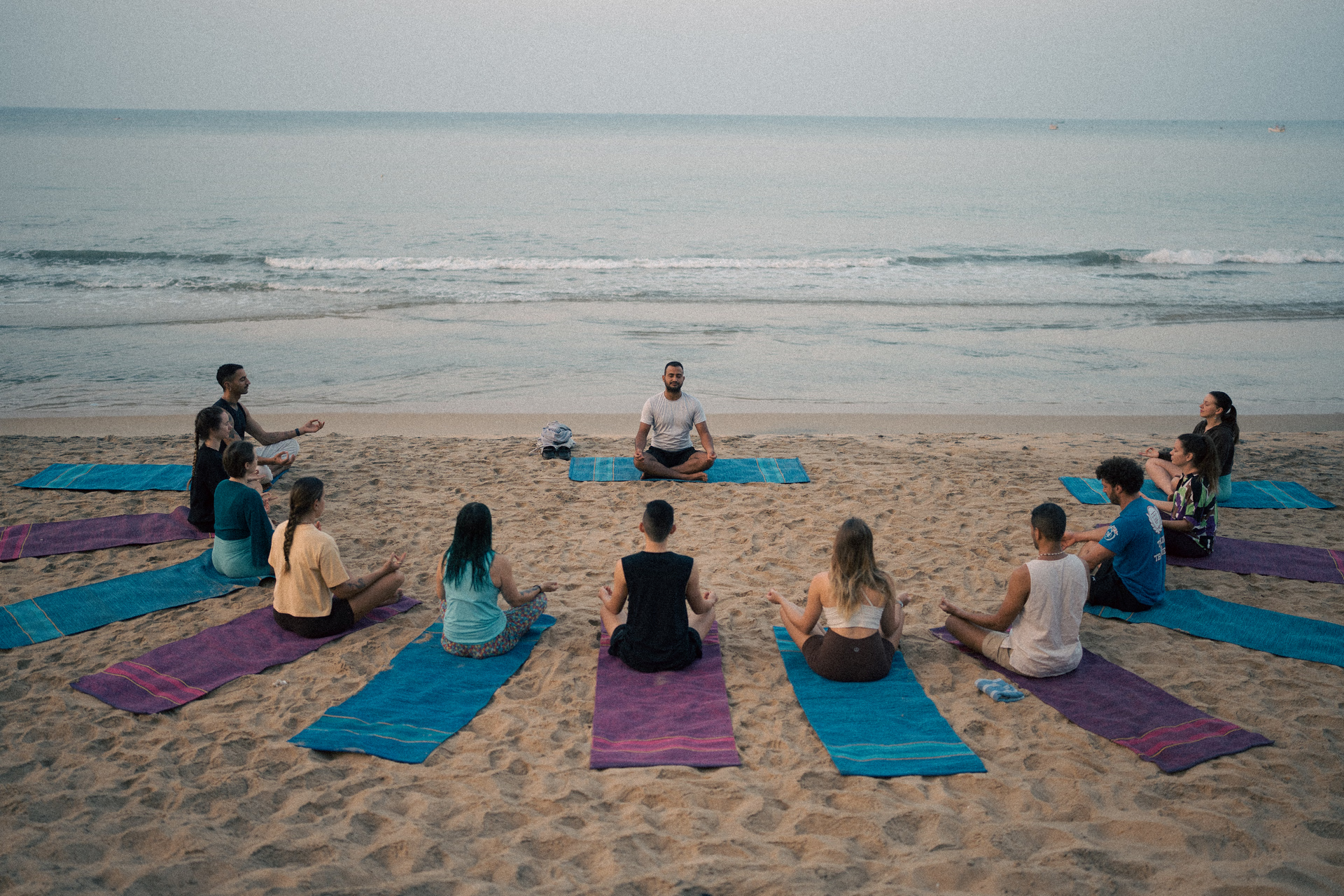

Meditation & Silence Retreat
Take 6 days off of modern life to get back to yourself. Through silence, meditation practice and creative exploration, you will reconnect with who you truly are.
Practice near the ocean and Jungle of Kerala
Omunity Meditation school located in Varkala, a serene cliffside town in Kerala, known for its unique mix of Ayurveda, yoga, beaches, and surf culture. Just minutes from our private campus, you’ll find golden sands, breathtaking cliffs and cosy cafés overlooking the Arabian Sea. Unlike India’s busier tourist hubs, Varkala offers a safe, welcoming atmosphere, ideal for yogis, travelers, and surfers looking for both peace and connection.