Sound Meditation: Benefits, Tools, and How to Practice
TL;DR


Sound has served as an instrument of meditative and healing practice across human cultures and throughout recorded history. The systematic use of specific frequencies, rhythmic patterns, and vocal resonance to alter states of consciousness predates written tradition — appearing in the shamanic practices of indigenous cultures worldwide, in the Vedic chanting traditions of ancient India, in Tibetan Buddhist ritual, and in the sacred music of virtually every contemplative religious lineage.
Contemporary interest in sound meditation — referred to variously as sound healing, sound therapy, or sound bath — represents both a revival of these ancient approaches and an emerging area of scientific inquiry into the relationship between auditory stimulation and neurophysiological state.
How Does Sound Affect the Mind and Body?
Sustained auditory stimulation influences brainwave activity through entrainment: the brain's electrical rhythms tend to synchronise toward the frequency of the external stimulus. Low-frequency sound correlates with theta and alpha states associated with deep relaxation and meditative absorption. Simultaneously, sustained tonal sound provides a stable external anchor for attention — particularly valuable for practitioners who find silent meditation difficult.
The brain responds to auditory input in ways that extend beyond simple perception. Sustained exposure to specific frequencies influences brainwave activity: research in psychoacoustics has documented correlations between low-frequency auditory entrainment and the slower brainwave states — theta and alpha — associated with relaxed awareness and meditative absorption.
The parasympathetic nervous system response associated with sound meditation sessions — reduced heart rate, decreased cortisol, relaxed musculature — is well-documented in the clinical literature, though the field continues to develop methodological rigour in its research design.
What Are the Documented Effects of Sound Meditation?
The most consistently documented effect is physiological relaxation: reduced heart rate, lower cortisol, and deepened breathing as the parasympathetic system becomes dominant. Beyond this, research supports improvements in sleep quality and reductions in anxiety biomarkers. Emotional material often surfaces in sessions, which requires informed facilitation and integration time.
Physiological relaxation — the induction of parasympathetic dominance through sustained tonal stimulation. Heart rate decreases, breathing deepens, and the stress response recedes. This is the most consistent and measurable effect of sound meditation practice.
Sleep support — a nervous system that has been genuinely calmed through sound practice is demonstrably more conducive to sleep onset. Disrupted melatonin production, commonly associated with chronic stress, shows improvement with regular engagement.
Stress biomarkers — blood pressure, cortisol levels, and subjective stress ratings all demonstrate improvement in sound therapy studies. The research base, while still developing, is consistent in its direction.
Energetic and subtle body work — within traditional frameworks, specific frequencies correspond to particular energetic centres (chakras) in the body. Practitioners consistently report qualitatively distinct effects of different instruments and frequencies — a phenomenon that invites serious investigation rather than dismissal.
Emotional processing — sound sessions frequently support the surfacing of emotional material that ordinary mental activity tends to suppress. This can be profoundly useful; it can also be unexpectedly intense. Practitioners new to sound work benefit from informed facilitation and appropriate time for integration.
What Are the Main Instruments Used in Sound Meditation?
The principal instruments are singing bowls (Tibetan metal alloy or contemporary crystal), tuning forks calibrated to specific frequencies, rhythmic percussion including frame drums and rattles, and the human voice in mantra practice. Each produces distinct acoustic effects through different mechanisms and serves different purposes in a sound meditation context.
Singing bowls — hand-hammered metal bowls, traditionally Tibetan and composed of a multi-metal alloy, or contemporary cast crystal bowls, struck or rimmed to produce sustained tones rich in harmonics. Each bowl generates a fundamental frequency and a series of overtones that interact in acoustically complex ways.
Tuning forks — precision instruments calibrated to specific frequencies, used both at a distance from the body and in direct contact with bone and tissue. The specificity of single-frequency sound distinguishes tuning forks from the harmonic complexity of singing bowls.
Percussion instruments — rattles, rain sticks, and drums are rhythmic sound instruments with roots in shamanic and indigenous healing traditions. Rhythmic entrainment has been documented in both anthropological and neuroscientific literature as a reliable inducer of altered states.
Mantra — the deliberate use of the voice as an instrument of sound and vibration. A mantra is a sacred syllable, word, or phrase that generates internal resonance when chanted, simultaneously focusing the mind through repetition and producing vibratory effects in the vocal, thoracic, and cranial structures. Om (Aum) is accessible to practitioners of any background.
Where Does Sound Fit in a Complete Practice?
Sound meditation is most productively understood as a complementary practice rather than a standalone path. It functions as an accessible entry point for beginners, as support during periods of heightened stress, and as a deepening tool within an established practice. It is not designed to replace the direct mental training of silent sitting, which develops capacities that sound practice alone cannot produce.
At Omunity, sound work is integrated within a broader curriculum of meditation and pranayama — one instrument within a comprehensive approach to understanding the mind and cultivating its capacity for stillness and clarity.
Frequently Asked Questions
What is the difference between a sound bath and sound meditation?
The terms are often used interchangeably. A sound bath typically refers to a passive group session in which participants lie down while a facilitator plays instruments — a receptive, experiential format. Sound meditation is the broader category, encompassing both receptive practices like sound baths and active practices such as mantra chanting. The distinction is one of format rather than principle.
Do I need prior meditation experience to benefit from sound work?
No. Sound meditation is one of the more accessible entry points to contemplative practice precisely because it provides an external anchor for attention, reducing the effort required to stay present. Beginners often find it easier to settle into than silent seated meditation.
What frequency is best for meditation?
There is no single universally optimal frequency. Research suggests that frequencies in the theta range (4–8 Hz) correlate with deep meditative states, while alpha frequencies (8–12 Hz) support relaxed, alert awareness. In practice, response to specific frequencies varies between individuals. Experimentation under informed guidance is more useful than prescriptive recommendations.
Can sound meditation replace silent sitting practice?
For most practitioners, no — and it is not designed to. Sound meditation excels at inducing physiological relaxation and providing accessible entry into meditative states. Silent sitting practice develops sustained attention, equanimity, and insight — qualities that require working with the mind directly, without external support.
Is there scientific evidence that sound healing works?
The evidence base is growing but uneven. Well-replicated findings include reductions in cortisol and anxiety, improved sleep quality, and reductions in self-reported stress. More specific claims of traditional frameworks have considerably less rigorous support. Sound meditation produces genuine and measurable effects on the nervous system; more ambitious claims await more rigorous investigation.
What we offer
From intensive teacher trainings to week-long retreats, we offer programs for every stage of your meditation journey.


200H Meditation & Pranayama Teacher Training
A 21-day intensive teacher training course designed to dive deep into consciousness and learn how to guide others. For yoga practitioners who want to dive deeper into meditation & pranayama and teach it.


Meditation Immersion Program
An intensive 12 day program to dive deep into yourself and discover who you are, through multi-style meditation & pranayama practice.

Meditation & Silence Retreat
Take 6 days off of modern life to get back to yourself. Through silence, meditation practice and creative exploration, you will reconnect with who you truly are.
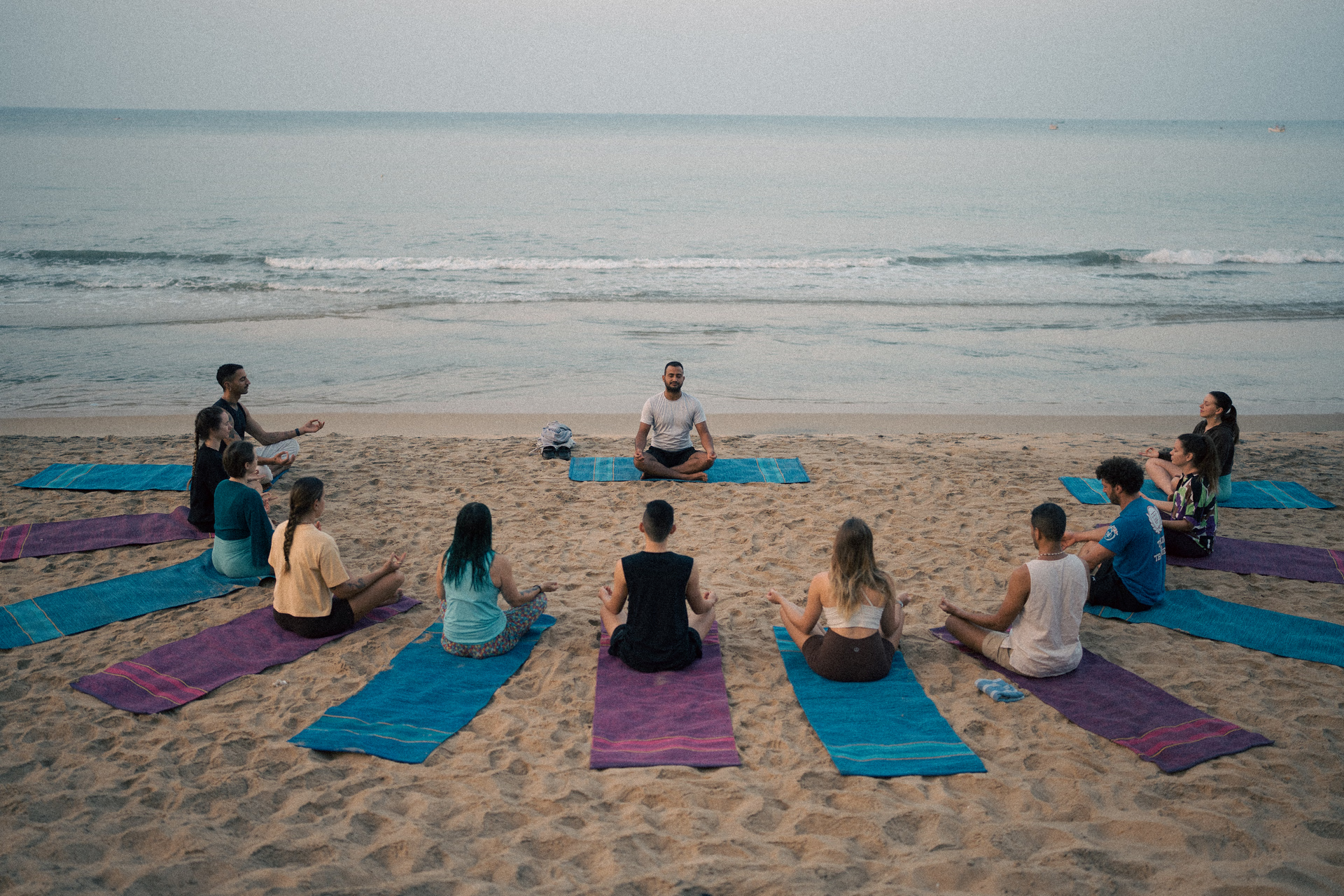
Practice near the ocean and Jungle of Kerala
Omunity Meditation school located in Varkala, a serene cliffside town in Kerala, known for its unique mix of Ayurveda, yoga, beaches, and surf culture. Just minutes from our private campus, you’ll find golden sands, breathtaking cliffs and cosy cafés overlooking the Arabian Sea. Unlike India’s busier tourist hubs, Varkala offers a safe, welcoming atmosphere, ideal for yogis, travelers, and surfers looking for both peace and connection.