
Nadi Shodhana: A Complete Guide to Alternate Nostril Breathing
TL;DR
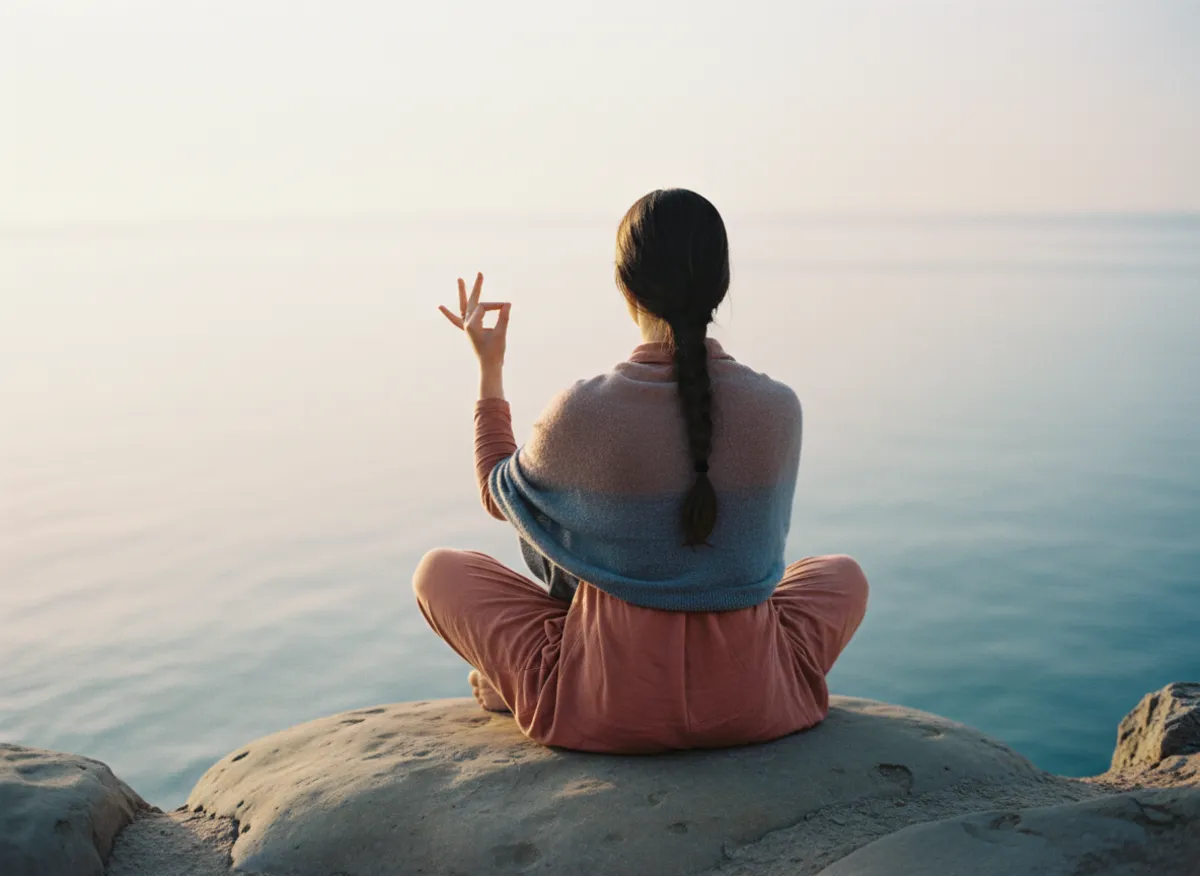

Most breathing techniques make dramatic claims. Nadi Shodhana is unusual because the research roughly backs them up.
Stress reduction, cardiovascular improvement, enhanced cognitive function — the benefits listed in traditional yoga texts have been showing up in peer-reviewed studies for about twenty years. The technique itself is simple. The challenge is not learning it. The challenge is the fifteen minutes a day.
What Is Nadi Shodhana?
Nadi Shodhana is a pranayama technique in which you breathe alternately through one nostril at a time, using the right hand to regulate the flow. "Nadi" means channel or flow in Sanskrit. "Shodhana" means purification. In yogic anatomy, the two nostrils correspond to the two main nadis: ida, the cooling lunar channel on the left, and pingala, the warming solar channel on the right. The practice moves breath deliberately through each, with the aim of bringing both into balance.
In the Hatha Yoga tradition, pranayama is the fourth of the eight limbs described by Patanjali — the bridge between the external practices (asana, ethical observances) and the internal ones (sense withdrawal, concentration, meditation). Nadi Shodhana is described in foundational texts including the Hatha Yoga Pradipika as preparation for deeper states of practice. The framing is consistent with what mindfulness research now shows: breathing directly regulates the nervous system, and a regulated nervous system meditates more effectively.
The relationship between shatkarma cleansing practices and pranayama is also worth understanding. Classical Hatha Yoga positions the shatkarmas as preparation for pranayama — the body is first cleared, then the breath is refined. Most serious practice programs teach both in sequence.
What Happens in Your Body When You Practice
Research suggests Nadi Shodhana activates the parasympathetic nervous system and reduces both heart rate and blood pressure within a single session. A 2018 study published in the Journal of Clinical and Diagnostic Research found significant reductions in perceived stress scores after three months of daily alternate nostril breathing. A 2020 cardiovascular study found improved pulse and blood pressure biomarkers in participants after four weeks of consistent practice.
The proposed mechanism involves the autonomic nervous system. Alternate nostril breathing activates the parasympathetic branch — rest and digest — while dampening the sympathetic branch — fight or flight. It also appears to promote bilateral hemispheric activation in the brain, since each nostril is anatomically connected to the opposite hemisphere. This may explain the improvements in cognitive clarity and attention that practitioners frequently describe alongside the calming effects.
This is not unique to Nadi Shodhana. Research on pranayama broadly shows consistent effects on respiratory function, cortisol levels, and nervous system regulation. Nadi Shodhana is notable among pranayama techniques because it is accessible to beginners, requires no equipment, produces measurable results quickly, and carries essentially no risk when practised correctly.
How to Practice Nadi Shodhana: Step by Step
Find a comfortable seated position with a straight spine. You can sit cross-legged on the floor or in a chair with feet flat on the ground. Spinal length is the key variable — slouching compresses the lungs and reduces the effectiveness of the breath.
Place the tips of the index and middle fingers of the right hand at the midpoint between the eyebrows. The thumb rests on the right nostril. The ring finger and little finger rest on the left nostril. This is Vishnu mudra — the standard hand position for Nadi Shodhana.
Begin by closing the right nostril with the thumb. Exhale fully through the left nostril. Then inhale through the left for a count of four. Close the left nostril with the ring finger, release the right nostril, and exhale through the right for a count of four. Inhale through the right for a count of four. Close the right, open the left, exhale through the left for a count of four. This completes one round.
Start with five to ten rounds per session. Work toward fifteen to twenty minutes daily over two to four weeks. Do not add breath retention — kumbhaka — until you can complete twenty minutes of the basic ratio comfortably. Kumbhaka is powerful but requires a stable foundation before it is introduced.
Common Mistakes
Rushing the exhalation. The exhalation should match the inhalation in length. Most beginners exhale too quickly and then compensate by shortening the inhale. Count carefully until the rhythm becomes automatic.
Wrong hand position. Vishnu mudra keeps the control precise and the hand stable. Pinching both nostrils simultaneously at the wrong moment breaks the cycle. Practice the hand position separately before adding the breath.
Practising on a full stomach. Pranayama compresses and expands the abdominal cavity. Practice before eating or at least two hours after a meal.
Adding retention too soon. Vipassana teachers note that breath retention practices should be introduced carefully within a supervised context. Kumbhaka significantly increases the intensity of the practice. Start without it. Add it only when the base practice is stable and ideally under the guidance of a qualified teacher.
Treating it as occasional. Five minutes twice a week produces little. The studies that show measurable results used daily practice of 15 to 30 minutes. Consistency is the variable that matters most — not intensity.
How to Build a Daily Practice
The best time to practice Nadi Shodhana is in the morning before eating. The nervous system is most receptive before the day accumulates its demands. Fifteen minutes before sitting for meditation makes the sitting session noticeably easier — the mind arrives already settled rather than spending the first ten minutes processing whatever happened before you sat down.
If morning is not possible, any time works as long as you are not immediately post-meal. Evening practice before bed can improve sleep quality — the parasympathetic activation carries forward for 30 to 60 minutes after the practice ends.
Start with ten rounds per session for the first two weeks. Extend to fifteen minutes in week three. By week four, the rhythm becomes natural enough that counting becomes unnecessary and the breath can flow continuously without interruption.
If you are working toward a meditation teacher training, Nadi Shodhana is foundational curriculum in most serious programs. Practising it daily before your training begins gives you one less technique to learn once you arrive, and puts you in the room already familiar with what the practice does to your nervous system. At Omunity's programs in Varkala, pranayama forms a core component of both the 6-day and the full 21-day teacher training curriculum.
Frequently Asked Questions
Can I practice Nadi Shodhana every day?
Yes. Daily practice is the standard recommendation. Most of the research supporting its benefits used daily sessions of 15 to 30 minutes over 4 to 12 weeks. It is one of the safest pranayama techniques and carries no practical upper limit for healthy adults.
What is the difference between Nadi Shodhana and Anulom Vilom?
The terms are often used interchangeably, but there is a classical distinction. Anulom Vilom uses the same alternating nostril pattern without breath retention. Nadi Shodhana in its full form includes kumbhaka — the pause between inhalation and exhalation. Most beginner-level instruction teaches Anulom Vilom without always naming it as such.
How long before I notice a difference?
Most practitioners notice a calming effect within the first few sessions. Research-backed changes — reduced stress biomarkers, improved heart rate variability — appear in studies using four to twelve weeks of consistent daily practice. The more consistent the practice, the faster the observable effects accumulate.
Is Nadi Shodhana safe during pregnancy?
The basic alternating nostril technique without retention is generally considered safe during pregnancy. Breath retention — kumbhaka — should be avoided. Consult a qualified yoga teacher or healthcare provider before starting any pranayama practice during pregnancy.
Should I practice Nadi Shodhana before or after meditation?
Before. Pranayama is traditionally positioned as preparation for meditation — it settles the nervous system and narrows attention before the more demanding work of sitting begins. The classical sequence is asana, then pranayama, then sitting meditation.
Lisa is a conscious content writer at Omunity Meditation.
What we offer
From intensive teacher trainings to week-long retreats, we offer programs for every stage of your meditation journey.


200H Meditation & Pranayama Teacher Training
A 21-day intensive teacher training course designed to dive deep into consciousness and learn how to guide others. For yoga practitioners who want to dive deeper into meditation & pranayama and teach it.


Meditation Immersion Program
An intensive 12 day program to dive deep into yourself and discover who you are, through multi-style meditation & pranayama practice.
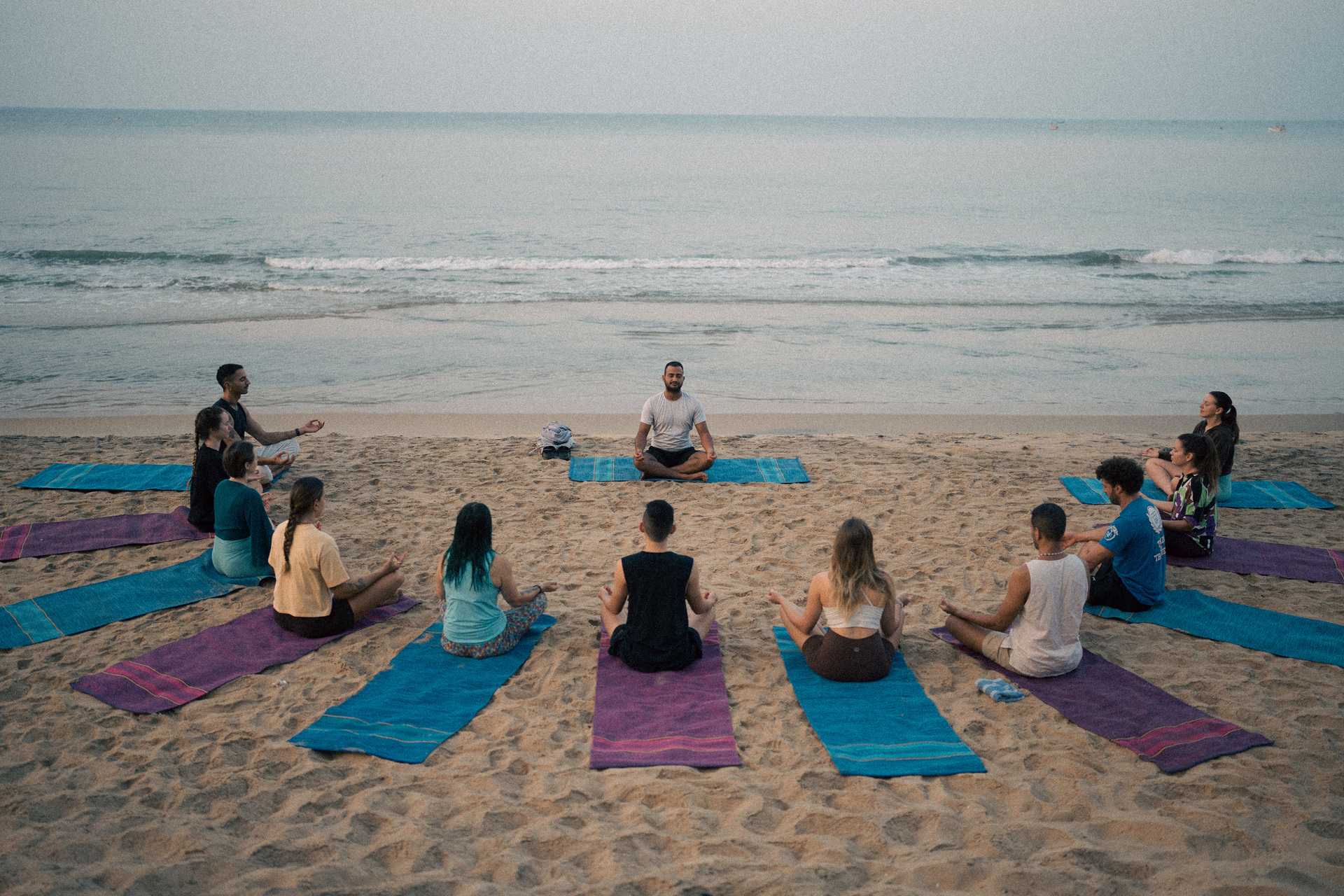

Meditation & Silence Retreat
Take 6 days off of modern life to get back to yourself. Through silence, meditation practice and creative exploration, you will reconnect with who you truly are.
Practice near the ocean and Jungle of Kerala
Omunity Meditation school located in Varkala, a serene cliffside town in Kerala, known for its unique mix of Ayurveda, yoga, beaches, and surf culture. Just minutes from our private campus, you’ll find golden sands, breathtaking cliffs and cosy cafés overlooking the Arabian Sea. Unlike India’s busier tourist hubs, Varkala offers a safe, welcoming atmosphere, ideal for yogis, travelers, and surfers looking for both peace and connection.