The Science Behind Mindfulness Meditation
TL;DR
Mindfulness has become one of the most widely circulated terms in contemporary wellness culture, applied to everything from clinical therapeutic interventions to consumer products. This ubiquity has made it useful to return to a more precise definition.
Mindfulness, in the sense in which it is used in formal meditation practice, refers to the quality of non-judgmental, present-moment awareness. The Pali term from which it derives — sati — carries connotations of remembrance: the practitioner remembers to be aware of what is actually occurring, rather than being absorbed in narrative, memory, or anticipation. Mindfulness meditation is the formal cultivation of this quality. It is an active discipline, not a passive state. The instruction is not to feel calm or to think positively, but to observe experience as it is, moment to moment, without the habitual overlay of evaluation and reaction.
Why Does Sustained Practice Produce Change?
The stress response activates not only in response to present threats but to mental time travel — dwelling in past events or anticipating future ones. Mindfulness training interrupts this loop. A mind practised in present-moment awareness is less frequently caught in the rumination cycles that sustain the stress response, producing measurable downstream effects on cortisol, sleep, and emotional reactivity.
The relationship between mindfulness and stress reduction is among the most studied areas in contemplative neuroscience. Jon Kabat-Zinn's Mindfulness-Based Stress Reduction programme, developed at the University of Massachusetts in the late 1970s, demonstrated consistent reductions in cortisol, anxiety, and pain perception across clinical populations. Subsequent research has replicated and extended these findings.
Consistent practice produces several additional documented outcomes:
Attentional stability — the capacity to sustain focus on a chosen object, whether the breath, a task, or a conversation, improves measurably with mindfulness training. The skill is not specific to the meditation context; it transfers to daily function.
Emotional regulation — practitioners develop what researchers describe as a wider window between stimulus and response. Rather than reacting automatically to emotional triggers, the practitioner becomes capable of observing the emotional event before acting on it.
Interoceptive awareness — sensitivity to internal bodily states develops, with practical implications for pain management, appetite, and the early recognition of emotional states before they become overwhelming.
Behavioural change — in addiction research particularly, mindfulness has demonstrated efficacy in supporting recovery by transforming the practitioner's relationship to craving. The urge is observed rather than obeyed — a shift that sounds simple and, in practice, requires considerable training.
What Are the Four Core Mindfulness Techniques?
The foundational technique is breath meditation: sustained attention to the physical sensations of breathing. Everything else builds on this capacity. Body scan, walking meditation, and five-senses grounding each develop different aspects of present-moment awareness and serve as useful complements depending on what the practitioner needs.
Breath meditation — sustained attention to the physical sensations of breathing. The fundamental practice and the appropriate starting point for most practitioners. Begin here.
Body scan — a systematic traversal of attention through the body, moving from the feet upward, noting sensation without attempting to alter it. Particularly effective for developing interoceptive sensitivity and releasing habitual physical tension.
Walking meditation — deliberate, slow ambulatory movement with full attention given to each component of the gait: the lifting of the foot, the movement through space, the contact with the ground. A valuable complement to seated practice, particularly when restlessness is present.
Five-senses grounding — the deliberate direction of attention to each sensory channel in sequence. Effective both as an acute intervention for anxiety and as a means of practising present-moment awareness outside formal sessions.
How Do You Take Mindfulness Beyond the Cushion?
Formal practice builds the capacity; daily life is where it is tested. Mindfulness begins to compound when it extends beyond the cushion into ordinary activity: eating, walking, conversation. This is not a separate technique — it is the natural extension of a mind trained toward sustained observation.
Omunity's 6 Day Silent Retreat provides the conditions for immersive, integrated practice: structured daily sessions within an environment designed specifically to support continuous mindful awareness across all activities of the day.
Frequently Asked Questions
What is the difference between mindfulness and mindfulness meditation?
Mindfulness refers to a quality of awareness — present-moment, non-judgmental attention — that can in principle be brought to any activity. Mindfulness meditation is the formal, seated practice specifically designed to cultivate that quality. The formal practice builds the capacity; daily life is where it is applied and tested.
How often should I practise mindfulness meditation to see benefits?
The research literature generally supports daily practice, with sessions of twenty to forty-five minutes producing the most consistent results. Shorter daily sessions are considerably more effective than longer, infrequent ones. Consistency over duration is the more important variable, particularly in the early stages.
Is mindfulness meditation a religious practice?
In its contemporary secular form — as codified by Kabat-Zinn and others — mindfulness meditation is presented as a psychological technique with no religious requirement. Its origins are Buddhist, and the practice carries the imprint of that lineage whether or not it is acknowledged. Practitioners with or without religious commitments engage with it productively.
Can mindfulness meditation help with anxiety?
Yes — this is among the most consistently supported findings in the clinical literature. Mindfulness reduces the frequency and intensity of anxious rumination by training the practitioner to observe anxious thoughts without reinforcing them. It is not a substitute for clinical treatment where that is indicated, but it is a meaningful complement to it and a sustainable long-term practice.
What is the best mindfulness technique for a complete beginner?
Breath meditation — sustained attention to the physical sensations of breathing — is the appropriate starting point for most people. It requires no equipment, no particular physical condition, and no prior experience. Ten minutes daily, practised consistently, is sufficient to begin developing the skill.
What we offer
From intensive teacher trainings to week-long retreats, we offer programs for every stage of your meditation journey.


200H Meditation & Pranayama Teacher Training
A 21-day intensive teacher training course designed to dive deep into consciousness and learn how to guide others. For yoga practitioners who want to dive deeper into meditation & pranayama and teach it.


Meditation Immersion Program
An intensive 12 day program to dive deep into yourself and discover who you are, through multi-style meditation & pranayama practice.
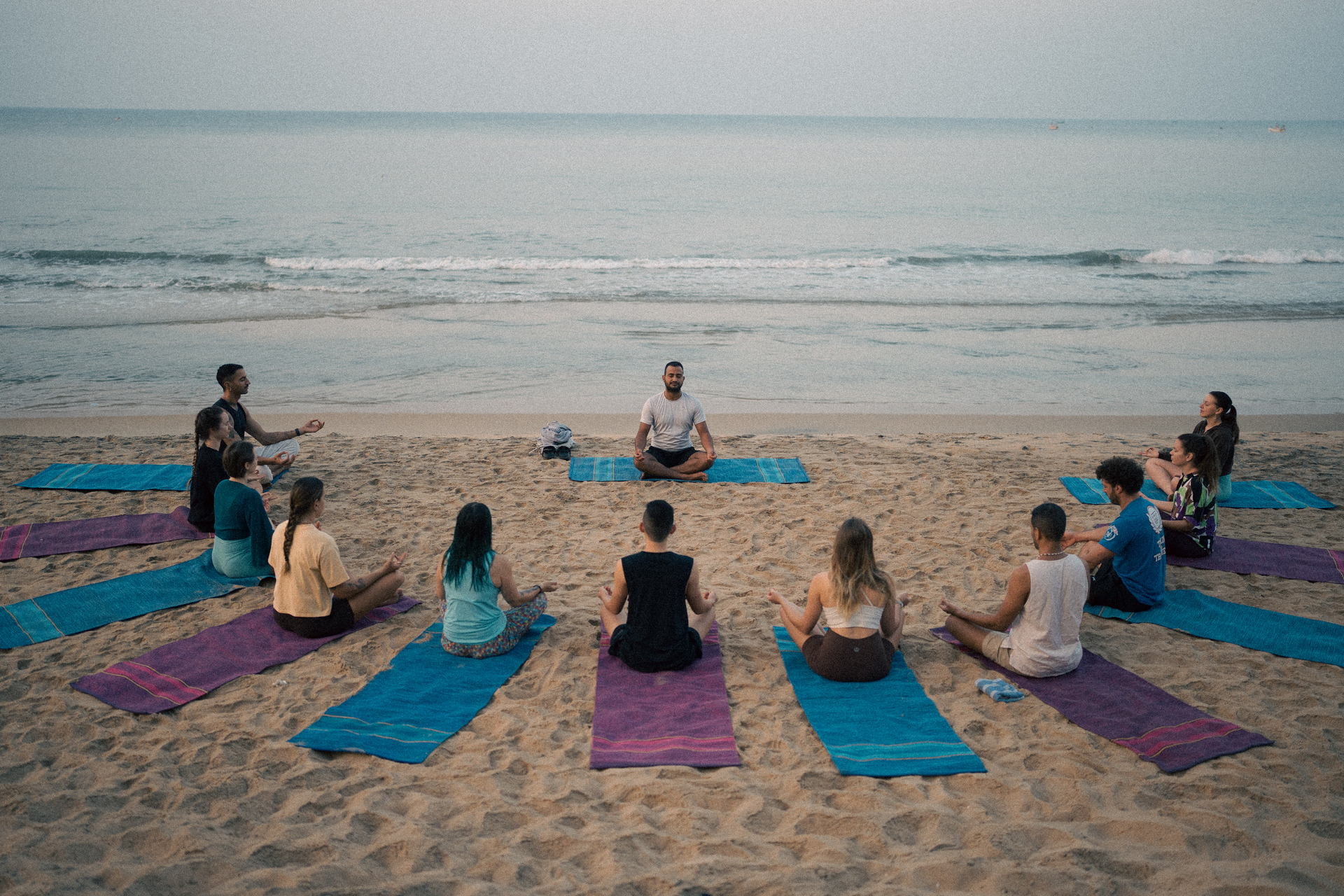

Meditation & Silence Retreat
Take 6 days off of modern life to get back to yourself. Through silence, meditation practice and creative exploration, you will reconnect with who you truly are.
Practice near the ocean and Jungle of Kerala
Omunity Meditation school located in Varkala, a serene cliffside town in Kerala, known for its unique mix of Ayurveda, yoga, beaches, and surf culture. Just minutes from our private campus, you’ll find golden sands, breathtaking cliffs and cosy cafés overlooking the Arabian Sea. Unlike India’s busier tourist hubs, Varkala offers a safe, welcoming atmosphere, ideal for yogis, travelers, and surfers looking for both peace and connection.