7 Common Meditation Challenges for Beginners
TL;DR


Most people who try meditation and stop do so for the same reason: they sit down, close their eyes, and immediately notice that their mind is running a full commentary on everything they are trying to ignore. Then they try to stop the thoughts. The thoughts do not stop. They conclude they are doing something wrong, or that meditation simply does not work for them.
They are usually not doing anything wrong. They just have a mistaken picture of what the practice is supposed to feel like.
Most meditation challenges for beginners trace back to expectations that nobody thought to question. Here is a clear look at the seven most common ones.
What Meditation Is Actually For
Meditation is not about stopping thoughts. It is about changing your relationship with them. You notice the mind has wandered, you return to your point of focus, and you do that again and again without judgment. That returning is the practice. The thoughts are not the problem. They are the material you work with.
With that as the baseline, here are the challenges that tend to derail beginners.
1. Expecting a Quiet Mind
This is the most common misunderstanding, and it causes more people to quit than anything else. Beginners sit down expecting silence and discover instead that the mind is busier than ever.
That busyness was always there. Meditation makes it visible. The goal is not to silence the mind. The goal is to stop being dragged around by it. Every time you notice the distraction and return to your breath or your point of focus, you are doing exactly what the practice requires. The noticing is not a failure. It is the work.
2. Expecting Results Too Fast
Meditation compounds slowly. The benefits, including reduced anxiety, better sleep, sharper attention, and a more stable relationship with difficult emotions, accumulate over weeks and months. They do not arrive after a few sessions.
Research published in peer-reviewed journals shows that consistent meditation practice over 12 weeks produces measurable reductions in psychological stress and improvements in nervous system regulation. The key word is consistent. The neurological foundation that the benefits come from requires sustained repetition to build.
If you sit for five sessions and feel nothing, that is not evidence that meditation does not work for you. It is evidence that you have been at it for five sessions.
3. Sitting in an Uncomfortable Position and Tolerating It
Physical discomfort is one of the most underrated obstacles in meditation. The instruction to sit still gets misread as sit in pain and bear it. The result is that a significant portion of each session is occupied with managing the body rather than the practice.
You do not need to sit cross-legged on the floor. A chair works well. What matters is a position stable enough to hold still and comfortable enough to stop competing with your attention. If you spend ten minutes of a twenty-minute session shifting and adjusting, the problem is your seat, not your ability to meditate.
4. Practicing Inconsistently
One long session per week is significantly less effective than ten minutes every day. The practice builds a neural pattern, and that pattern is reinforced through daily repetition. Gaps allow it to weaken.
University research consistently shows that daily practice, even brief practice, produces stronger outcomes than irregular longer sessions. The habit itself is as important as the session. Five minutes every morning is a more useful starting point than thirty minutes whenever you can fit it in.
5. Using Meditation to Avoid Difficult Emotions
This is a subtler challenge that tends to emerge after a few months rather than on day one. Meditation can become a way to escape from what is uncomfortable rather than a way to meet it. You sit down, go inward, and use the practice to not feel whatever is present.
This is the opposite of what the practice is for. Meditation is designed to increase your capacity to be present with difficulty, not to bypass it. If you notice yourself turning to meditation primarily as an escape when something is emotionally uncomfortable, that pattern is worth examining.
6. Switching Techniques Constantly
Every week there is a new meditation method being recommended somewhere. Beginners often move through them quickly, trying each for a few days before deciding it is not working and moving to the next one.
No technique shows its depth in three sessions. Most methods require four to six weeks of consistent practice before you can genuinely evaluate whether they suit you. Technique-hopping keeps you at the surface of each one without ever going deeper into any of them. Pick one method to begin with. Breath awareness is a stable starting point. Stay with it until you understand what it is actually asking of you.
7. Confusing Relaxation with Meditation
Relaxation is a common side effect of meditation. It is not the goal, and it is not a reliable sign that the session went well.
Some of the most productive meditation sessions are not relaxing at all. They are restless, frustrating, or emotionally activating. What makes them productive is staying present with what is there. Conversely, a session where you feel pleasantly zoned out may not have involved much actual meditation.
The quality marker for a session is attention, not ease. Did you notice when the mind wandered? Did you return? That is what matters.
If you are looking to build a serious foundation for your practice, Omunity offers meditation programs ranging from a 6-day introduction to a 21-day teacher training. For those drawn specifically to working with silence and stillness over an extended period, the Omunity silent meditation retreat is built around supervised practice in a structured residential environment.
Frequently Asked Questions
Is it normal for meditation to feel boring?
Yes. Boredom in meditation is often resistance to being present without stimulation. It tends to ease with consistent practice. If it persists, try narrowing your focus, for example counting breaths rather than using a broader open awareness approach. More structure often helps at the beginning.
Why do I feel more anxious after meditating?
For some people in the early stages, meditation increases awareness of anxiety that was already present but unnoticed. This often settles with continued practice. If it persists, try a shorter session length and build up gradually. Working with a shorter, more structured technique can also help.
Does it count if I fall asleep?
If you fall asleep consistently, it usually means you are meditating when the body is depleted or too close to sleep. Try meditating earlier in the day and sitting upright rather than lying down. Falling asleep occasionally is normal. Falling asleep every session is a scheduling problem rather than a practice problem.
How long do I need to meditate each day to see results?
Five to twenty minutes daily is a practical range for beginners. Consistency matters more than duration. Research suggests regular daily practice over 45 to 60 days produces measurable changes in attention and stress responses. Start with whatever you can do every day without fail, even if that is five minutes.
Should I try different types of meditation or stick to one?
Stick to one to start. Give a single technique at least four to six weeks before evaluating it. Once you have a stable foundation in one method, exploring others gives you something to compare and build on. Without that foundation, exploring too early tends to produce frustration rather than depth.
Lisa is a conscious content writer at Omunity Meditation.
What we offer
From intensive teacher trainings to week-long retreats, we offer programs for every stage of your meditation journey.


200H Meditation & Pranayama Teacher Training
A 21-day intensive teacher training course designed to dive deep into consciousness and learn how to guide others. For yoga practitioners who want to dive deeper into meditation & pranayama and teach it.


Meditation Immersion Program
An intensive 12 day program to dive deep into yourself and discover who you are, through multi-style meditation & pranayama practice.
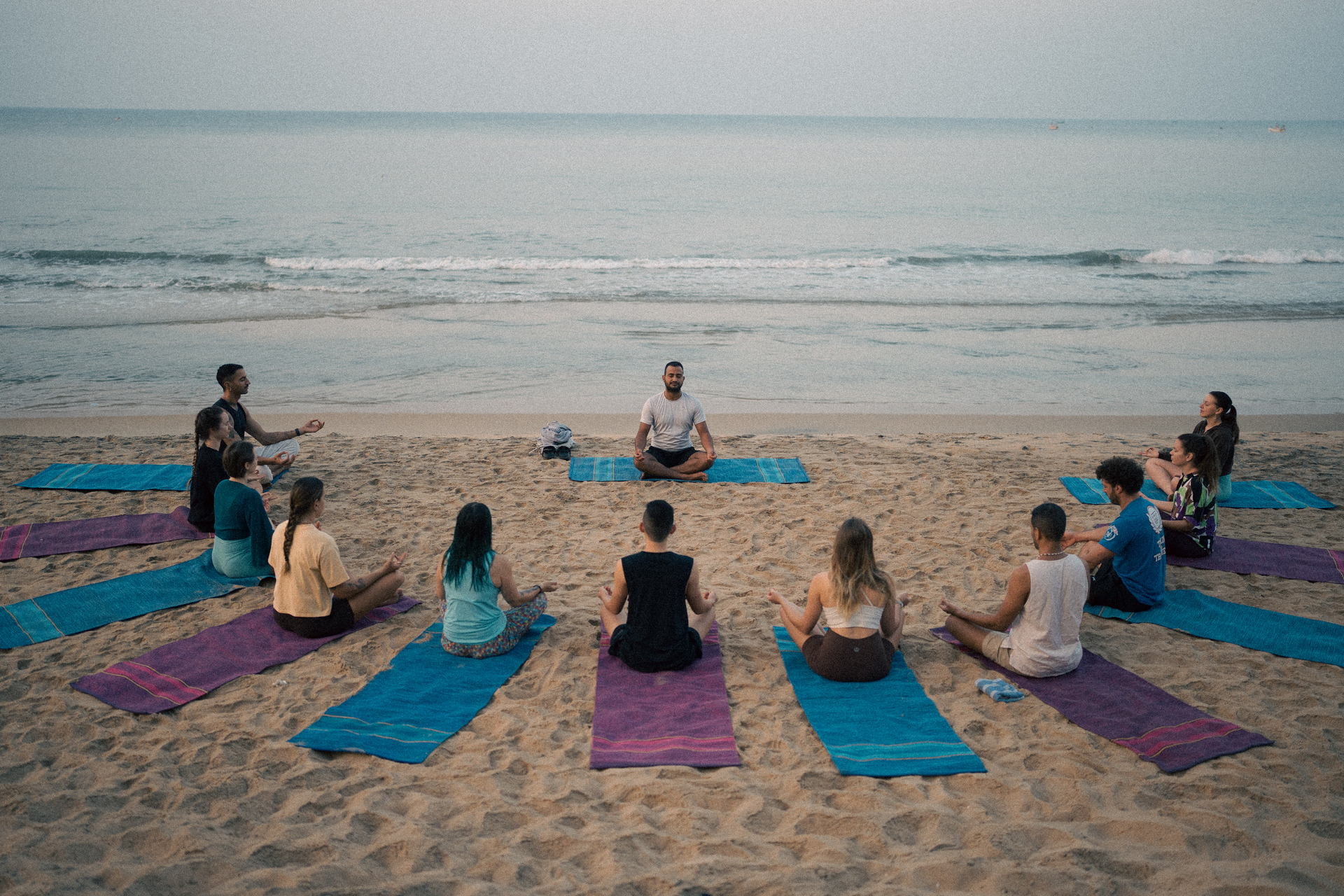

Meditation & Silence Retreat
Take 6 days off of modern life to get back to yourself. Through silence, meditation practice and creative exploration, you will reconnect with who you truly are.
Practice near the ocean and Jungle of Kerala
Omunity Meditation school located in Varkala, a serene cliffside town in Kerala, known for its unique mix of Ayurveda, yoga, beaches, and surf culture. Just minutes from our private campus, you’ll find golden sands, breathtaking cliffs and cosy cafés overlooking the Arabian Sea. Unlike India’s busier tourist hubs, Varkala offers a safe, welcoming atmosphere, ideal for yogis, travelers, and surfers looking for both peace and connection.