How to Become a Meditation Teacher: What It Actually Takes
TL;DR


Meditation teacher training is one of the most searched things in the yoga space. It is also one of the least regulated. Anyone can design a curriculum, print a certificate, and call themselves a certified teacher. This is not a reason to avoid the path. It is a reason to choose carefully.
What Does a Meditation Teacher Actually Do?
A meditation teacher guides others through practice, explains the principles behind the technique, and holds a structure that students cannot yet hold for themselves. This is a different skill from being a practitioner.
Meditation is largely private — you notice what arises, return to the object of attention, and develop familiarity with your own mind. Teaching requires you to understand what is likely to arise for someone else, and to create conditions in which they can work with it.
The gap between practising well and teaching well is real and underestimated. It is possible to sit in meditation every day for five years and still be unprepared to guide a first session. What bridges the gap is study — of technique, of the psychology of attention, of how different traditions approach the same problems differently — and supervised practice in front of actual students.
Do You Need a Certification to Teach?
There is no government body that licenses meditation teachers in most countries. Anyone can legally teach. But certification matters for two practical reasons: it signals credibility to students and employers, and a structured training program compresses years of independent learning into a focused period of study.
The most widely recognised framework is Yoga Alliance, which registers teacher training schools and certifies graduates. A 200-hour Yoga Alliance certification from a reputable school is a reasonable starting credential. But Yoga Alliance registration tells you a school has met administrative requirements — it does not evaluate curriculum quality, teacher lineage, or the depth of meditation-specific content.
What to look at instead: who teaches, what traditions they trained in, whether supervised teaching practice is included, and whether the curriculum covers meditation-specific theory rather than folding it into a general yoga training.
What to Look for in a Training Program
These are the six criteria worth examining before you commit to a program.
Depth of curriculum across multiple traditions. A program that teaches only one technique — only Vipassana, or only MBSR, or only mantra — is a specialisation, not a complete training. Understanding what meditation is across its many forms spans many traditions, and a teacher who only knows one approach will struggle with students whose needs sit outside it.
Qualified teachers with a verifiable lineage. Ask directly: who taught your teachers? A school that cannot answer this question has no lineage. Lineage is not mysticism — it is a quality assurance mechanism.
Supervised teaching practice included in the hours. Watching someone teach is useful. Being watched while you teach is essential. Any training that counts hours without including supervised practice sessions should be scrutinised.
Philosophy and theory alongside technique. The science behind mindfulness and meditation is now substantial. The philosophical frameworks — yoga philosophy, Buddhist psychology, the neuroscience of attention — are part of what you transmit when you teach. A program that skips this is producing technicians, not teachers.
Reasonable hour count. A 200-hour residential training is the minimum for a complete foundation. Shorter programs (50 to 100 hours) produce introductions, not certifications worth marketing.
Honest prerequisites. The best programs name who the training is for and who it is not for. A program that markets itself to "all levels" without prerequisites is unlikely to hold its graduates to a serious standard.
How Long Does It Take?
A serious 200-hour teacher training runs 21 to 30 days residentially, or several months part-time online. The hours matter less than the depth of the experience.
A 21-day residential program where you practice six to eight hours daily, attend philosophy lectures, and teach in front of peers is worth considerably more than a 300-hour course spread over weekends across a year. Residential training intensifies learning by removing ordinary life. When you cannot check your phone, cook your own meals, or leave the campus, the practice becomes total. This is not always comfortable. It is, for most people, productive.
What to Expect During a Residential Teacher Training
The first few days are an adjustment. The schedule is early and full — 5:30am start, practice sessions before breakfast, theory through the morning, supervised teaching in the afternoon, evening meditation. By day four or five, most students stop fighting the structure and start working within it.
What shifts during a residential is not just skill — it is context. You begin to see the practices you have been doing in a larger frame. Pranayama techniques you have practised in isolation, like Nadi Shodhana, start to make anatomical and philosophical sense alongside the theory. Shatkarma cleansing practices that seemed peripheral reveal themselves as foundational to understanding what the body brings into the practice room.
By the final week, most students are teaching short sessions to their peers. Feedback is given. Adjustments are made. The difference between how you teach on day one and how you teach on day twenty-one is usually significant and observable.
Should You Train in India or Online?
Online programs give you flexibility. India gives you immersion. The difference is not just logistical — the environment changes what you absorb.
Studying meditation in a country where the practice has been a continuous living tradition for centuries adds a layer of context that no video call replicates. You encounter the practice outside the classroom: in temples, in the daily rhythms of the local community, in the quality of silence that exists in a town where the day starts before sunrise.
India is also significantly more affordable. A 21-day residential teacher training in Varkala, Kerala typically costs a fraction of an equivalent program in Europe or North America, with accommodation and meals included.
Rishikesh is the most well-known base for teacher training in India. It is also the most crowded, the most commercially saturated, and the most variable in quality. Schools in Varkala, Mysore, and Dharamsala offer comparable or better programs with fewer distractions and a more stable practice environment.
Omunity Meditation's 21-Day 200H Teacher Training in Varkala runs across three phases: a 3-day silence opening, a 12-day meditation immersion, and 9 days of teaching methodology and supervised practice. The curriculum covers meditation across multiple traditions, pranayama including Nadi Shodhana and advanced techniques, yoga philosophy, neuroscience, and the business of teaching.
Frequently Asked Questions
How long does it take to become a certified meditation teacher?
A 200-hour residential training takes 21 to 30 days. Part-time programs run 4 to 6 months. Certification is the beginning of the process, not the end. Most experienced teachers describe the first two years of actual teaching as the real training.
Is a Yoga Alliance meditation certification worth it?
Yoga Alliance registration gives graduates a recognisable credential and access to the global teacher directory. It does not guarantee curriculum quality. The value depends almost entirely on the school's own standards, not on the Yoga Alliance registration itself.
Can I teach meditation without doing a teacher training?
Legally, yes. But a training program compresses years of study into a structured period, provides supervised practice, and gives you the conceptual framework to understand what you are teaching. Teaching without this is possible — it is significantly harder to do well, and harder to explain to students why they should trust you.
What is the difference between a meditation teacher and a mindfulness coach?
Mindfulness coaching is typically evidence-based and secular, drawing on MBSR and related research. Meditation teaching is broader — it includes philosophical traditions, multiple techniques, and often a spiritual context. The distinction matters more in how you frame your work than in the actual practices.
How much do meditation teachers earn?
Studio teachers in major cities earn $30 to $80 per class. Corporate mindfulness facilitators earn considerably more. Most meditation teachers build income across classes, workshops, retreats, and online content. Teaching full-time is sustainable — it typically takes 3 to 5 years to build a practice that supports it.
Lisa is a conscious content writer at Omunity Meditation.
What we offer
From intensive teacher trainings to week-long retreats, we offer programs for every stage of your meditation journey.


200H Meditation & Pranayama Teacher Training
A 21-day intensive teacher training course designed to dive deep into consciousness and learn how to guide others. For yoga practitioners who want to dive deeper into meditation & pranayama and teach it.


Meditation Immersion Program
An intensive 12 day program to dive deep into yourself and discover who you are, through multi-style meditation & pranayama practice.

Meditation & Silence Retreat
Take 6 days off of modern life to get back to yourself. Through silence, meditation practice and creative exploration, you will reconnect with who you truly are.
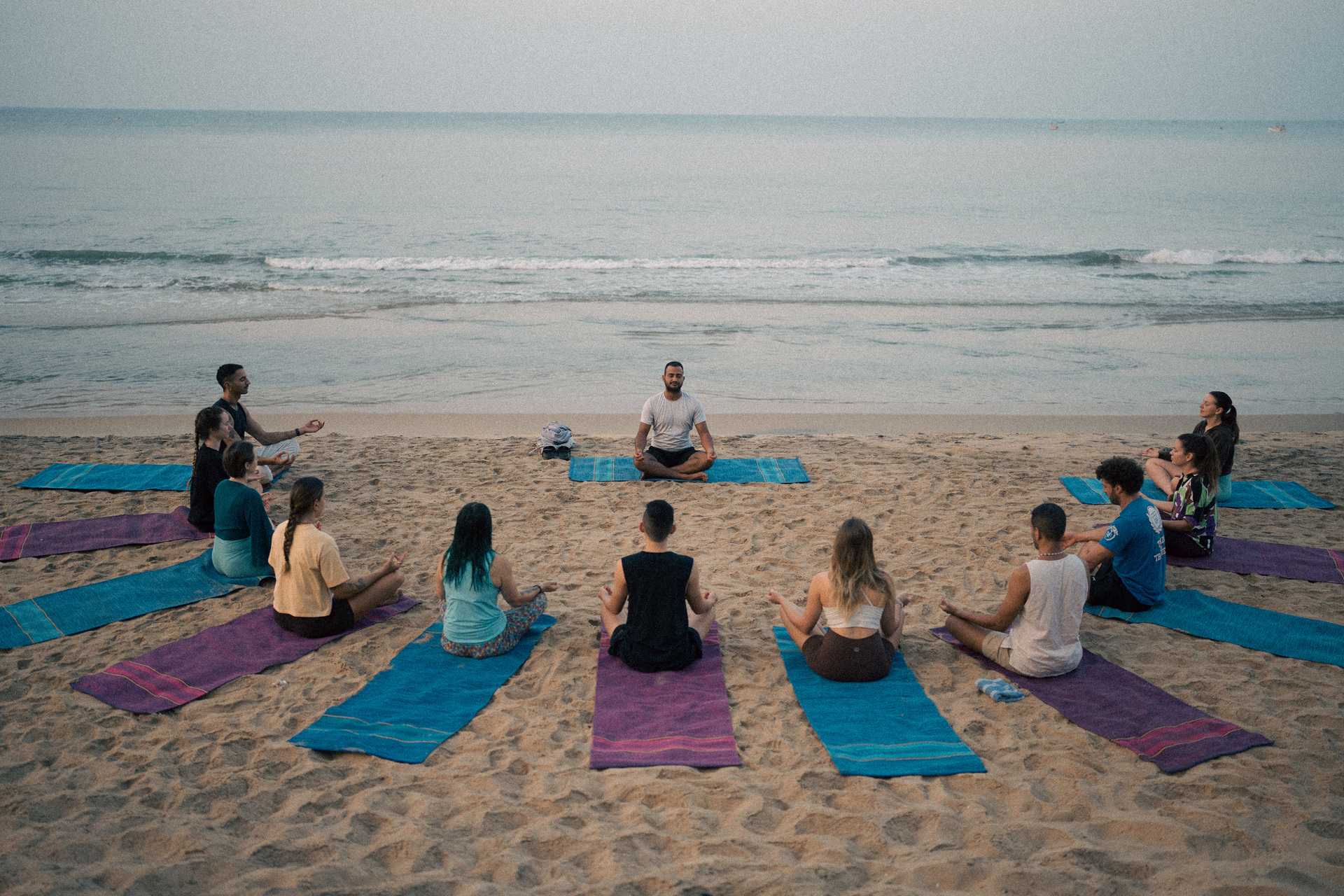
Practice near the ocean and Jungle of Kerala
Omunity Meditation school located in Varkala, a serene cliffside town in Kerala, known for its unique mix of Ayurveda, yoga, beaches, and surf culture. Just minutes from our private campus, you’ll find golden sands, breathtaking cliffs and cosy cafés overlooking the Arabian Sea. Unlike India’s busier tourist hubs, Varkala offers a safe, welcoming atmosphere, ideal for yogis, travelers, and surfers looking for both peace and connection.